Creatine Before or After Your Workout: What Research Actually Says
|
|
Clinically reviewed by Aston Dommel, PhD, RD, CSSD
Creatine works by saturation, and not by spiking before or after a gym sesh. Once your creatine stores are full, it hypothetically shouldn’t matter if you take it before or after a workout.
One study points to benefits of taking creatine post-workout, but this study was small and flawed. Other research is inconclusive.
Rather than pairing your creatine with a workout, pair it with a daily habit that you won’t forget.
Are you wondering: should I take creatine before or after a workout? The confusion on creatine timing is real (even some of the studies on this subject disagree).
The answer, however, is actually pretty simple. Creatine works by keeping your muscles’ stores topped up, and not as a pre or post-workout stimulant. Instead of timing your creatine pre or post workout, take it at the same time daily.
This article examines the science behind taking creatine before or after workouts, what to do on rest days, and practical tips for building a creatine routine that works for you.
Taking creatine daily matters far more than taking it before vs. after your workout. You may have heard locker room rumors that taking creatine after a workout offers a slight advantage, but the evidence for that is very thin — we’ll dive into it further on in this article.
“Take it every day at whatever time you’ll actually remember,” recommends Nick Barringer, PhD, RDN, a human performance consultant, researcher, educator, and corporate wellness speaker. “The people who get results from creatine are the ones who are consistent.”
That’s because creatine works by saturation, so consistency beats timing.
| When to take creatine | |
|---|---|
| Training day (morning workout) |
Daily at the same time. Whatever time you can be consistent with. |
| Training day (evening workout) |
Daily at the same time. Whatever time you can be consistent with. |
| Rest day |
Daily at the same time. Whatever time you can be consistent with. |
| Travel day |
Daily at the same time. Whatever time you can be consistent with. |
Since creatine works by saturation, the precise timing around your workout doesn’t matter much. But what does that mean?
“Think of your muscles as a tank that holds creatine,” says Dr. Barringer. For most people, their “tanks” are only about 60 to 80% full from diet and natural production alone. Taking a creatine supplement tops up the tank until it’s full. It can take about three to four weeks of taking creatine before you reach saturation.
“Once it’s full, it stays full as long as you keep adding a little each day to replace what your body naturally uses,” explains Dr. Barringer.
In other words, creatine doesn’t act like caffeine or other substances where you take it and then feel something shortly after. It works when your stores are consistently high. “The benefit is about the level in the tank, not the timing of any single scoop,” says Dr. Barringer.

Now that you’ve got an idea of how creatine works in your body, let’s take a deeper look at the research on taking creatine before or after workouts.
People who argue that there’s a benefit to post-workout creatine often cite one small study. But this is a big claim built on a faulty foundation.
The 2013 study by Antonio & Ciccone, published in the Journal of the International Society of Sports Nutrition, was very small. It looked at 19 recreational bodybuilders, all male, who were split into two groups: one group took 5 grams of creatine immediately before workouts for four weeks, and the other group took the same amount immediately after workouts.
At the end of four weeks, there was no significant difference between groups. However, using a controversial statistical method, the authors did state that taking creatine post-workout was “possibly more beneficial” when it came to lean body mass and bench press strength.
That’s not exactly resounding support for the benefits of taking creatine post-workout compared to before. To sum it up, the study was:
The general consensus across multiple recent studies and expert reviews is that there isn’t a big difference between taking creatine before or after a workout.
“In my professional opinion, no, timing [around workouts] doesn’t matter in any practical sense, and the research is consistent on that,” says Dr. Barringer. “Given that creatine works through saturation, this is exactly what I’d expect: once your stores are full, the clock doesn’t matter.”
Let’s break down some of the most notable studies on this subject.
| Study | Findings |
|---|---|
| 2022 “Creatine O’Clock” review | This narrative review by leading creatine researchers concluded that it’s unclear whether creatine timing influences adaptations (like muscle mass or strength). |
| 2021 Nutrients review | A narrative review that stated emerging evidence suggests greater benefits from post-exercise creatine, but that overall the available studies have limitations that make it difficult to draw any firm conclusion. |
| 2022 Frontiers in Sports and Active Living randomized controlled trial | A collegiate athlete study looked at pre vs. post exercise creatine over eight weeks, and didn’t find a significant difference between the two. |
| 2022 Journal of Sports Medicine and Physical Fitness randomized controlled trial | A within-subject trial gave creatine before training one side of the body, and after training the other, on alternating days. It found similar gains in hypertrophy and strength between the two conditions. |
| 2026 Nutrients randomized crossover pilot trial | A small pilot study of 11 men who performed five experimental conditions: creatine immediately before resistance training, during training, immediately after, placebo, and no supplement. Pre-exercise creatine was associated with greater strength performance than the other conditions, but the authors state the findings are “exploratory” and need to be confirmed with a larger sample size and better controls. |
When it comes to creatine, scientists agree on the what (5 grams, every day) and shrug at the when (before vs. after workouts doesn’t seem to matter significantly).
The take home lesson, after analyzing the evidence, is that you should take creatine daily, at the time you’re most likely to remember to take it.
A good argument for taking creatine before your workout is that it’s simply more convenient. Adding a scoop of creatine to your pre-workout shake might already be part of your routine, or a super-easy addition that’s easy to remember.
There’s also the theoretical argument that since a typical 5 gram dose of creatine is absorbed into the bloodstream relatively quickly, taking it shortly before a workout means it would be circulating in your blood during the workout itself. This could help support energy production during high-intensity efforts, like weightlifting.
That said, the current research doesn’t support that theory. The 2022 review found that there was no clear benefit of taking creatine before or after workouts for muscle strength or body composition. The 2026 study did find a small strength benefit of taking creatine before a singular workout, but it was an incredibly small study of only 11 participants so, once again, not possible to draw firm conclusions.
The argument for taking creatine after your workout stems from how your body responds to exercise. After training, blood flow to your muscles is elevated, and muscle cells may be more receptive to absorbing nutrients.
In theory, this could make the post-workout window a good time to deliver creatine to working muscles, and it could possibly explain the results of the 2013 study discussed above. However, more high-quality research needs to replicate these results before conclusions can be made, and to date that hasn’t been done.
In the meantime, if pairing creatine with your post-workout shake helps you be consistent, do that. But the benefit there is consistency, and not a performance boost. If a different time fits your routine better, then go with what works best for you.
Yes, you should take creatine on rest days. “Rest days are when people most often skip it, and that’s a mistake,” says Dr. Barringer.
Your body breaks down roughly 1 to 2% of its creatine stores every day, whether you train or not, explains Dr. Barringer. If you skip creatine on rest days, you’re just draining that metaphorical “tank” faster.
When taking creatine on a rest day, the same dose and same time as you take it on workout days is ideal — that’s what keeps your creatine stores saturated.
If you find it tough to remember to take your creatine on rest days, then try pairing it to a daily constant rather than a workout sesh. Breakfast, coffee, teeth brushing, shower, dinner, and more all work.
Taking high-quality creatine monohydrate daily is what matters, not timing it before or after a workout.
But how do you make that habit automatic? Here are some tips:
Pick a consistent time and stick with it. Take your creatine daily, at roughly the same time, for the best results. You could even set a daily alarm or reminder notification.
Try habit stacking. The easiest way to stay consistent with creatine is to anchor it to an existing daily habit. For example, before you brush your teeth, or mixed into your morning coffee.
Take it daily, including rest days. Creatine works through saturation over time, and not a one-time boost after a workout. Skipping days will slow the process and cut into your creatine benefits.
Consider travel-friendly creatine options. Flavored creatine chews or travel-size creatine packets make it easier to keep up your creatine routine when you’re not at home.
Stick with the standard 5 gram dose. Most people benefit from 5 grams of creatine monohydrate daily. Taking more isn’t necessary.
Mix it into liquids or foods. Creatine monohydrate dissolves easily into water, juice, protein shakes, oatmeal, smoothies, and more without affecting the taste.
Wondering how to choose a quality creatine to add to your routine? Look for third-party certifications like NSF Certified for Sport®. Even better if it’s tested beyond the industry standard for microplastics, PFAS, and heavy metals, like Momentous creatine is.

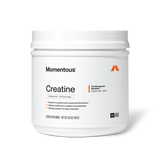
There’s no strong research to support benefits for taking creatine post-workout vs. pre-workout. Since creatine works by saturation, the best time to take it is the time you’ll never forget (rest days included). Want to get started taking creatine? Check out Momentous’ Signature Spec creatine, which is the purest available.
It doesn’t matter whether you take creatine before or after your workout. Creatine doesn’t act like an exercise stimulant. Rather, its stores are built up through consistent daily use.
Some people prefer to take creatine with food, rather than on an empty stomach. “Taking [creatine] with food or carbs may help slightly with uptake and reduces the chance of an upset stomach,” says Dr. Barringer. “But that’s a comfort point, not a performance one.”
Yes, you should take creatine on rest days. Creatine works by gradually increasing the amount stored in your muscles, so daily consistency matters more than whether you’re training that day. Taking creatine every day, including on rest days, helps maintain fully saturated muscle creatine levels, which supports strength, power output, and muscle performance over time.
No, you do not need to do a creatine loading phase to see benefits. “A loading phase (around 20 grams per day for a week) saturates faster,” says Dr. Barringer, “but 3 to 5 grams daily gets you to the same place in about three to four weeks with less stomach upset.”
Yes, you can mix creatine with a pre-workout supplement. Creatine monohydrate is stable, flavorless, and dissolves easily in liquids, so it can be added to a pre-workout drink, smoothie, or shake without impacting its effectiveness. Many people choose this approach because it makes creatine part of a consistent routine.
Creatine typically starts working once your muscle stores become saturated, which usually takes about 3-4 weeks when taking 3-5 grams daily. Some people may notice improvements in strength or performance sooner, but most of the measurable benefits appear after consistent daily supplementation over several weeks.

Sarah Bence, OTR/L
Sarah Bence is an award-winning health and travel writer, and a registered and licensed occupational therapist.
Recommended Products