Third-Party Tested Supplements: What That Actually Means (and How to Verify Yours)
|
|
Clinically reviewed by Aston Dommel, RD, Phd, CSSD.
The FDA does not approve supplements before they go on market. Third-party certification is the best way to verify supplements before you take them.
Third-party certifications show that what’s in the supplement matches the product label, and the product doesn’t contain hidden ingredients either.
It’s a good idea to verify supplements you want to take to ensure that they are third-party certified. You can do this on the certifier’s online database and view their Certificate Of Analysis on the brand’s website.
If you’re anything like me, you’re well-versed in spotting sketchy health products. You know the ones with the inflated claims and promises, the ones that purposefully use vague language to confuse you, or the ones that use influencers to try to convince you that this is the one thing that changed their life? (It probably isn’t.)
But one tripping point is on the third-party tested label, which is widely printed across supplements, even those that are inexpensive. What does it actually promise? After all, the FDA doesn’t approve supplements before they’re sold. In this article, we’ll fully dive into what third-party tested means,why it’s important, the major programs that do it, how to verify any product before you buy it, and the red flags that mean a supplement may not be safe or worth your purchase.
Third-party certification programs verify the quality, safety, and label accuracy of dietary supplements, per a review in the Journal of the International Society of Sports Nutrition. An independent organization (not the brand) tests the product’s ingredients and usually audits the facility where the product is manufactured.
This testing checks the product to ensure that what’s listed on the label is actually in the bottle, ingredients-wise and the dosage is also in the listed amount. This testing also makes sure that substances that aren’t listed on the label, such as high contaminant levels, aren’t in the product.
There are several certification organizations that do this, including NSF Certified for Sport and Informed-Choice/Informed-Sport. However, it does not mean that the product is safe or effective, according to Operation Supplement Safety. Our bodies all have different needs and potential conflicts. It can’t account for an individual’s health conditions, other supplements, medications taken, or even if the recommended dose on the bottle is right for you, says Roxana Ehsani, MS, RD, CSSD, a board certified sports dietitian.
In short: You have to look out for your health and safety before taking anything. Don’t assume that just because a supplement is being sold that it’s automatically safe and healthy to take.
| What it means | |
|---|---|
| Third-Party Tested Supplements | An independent lab ran tests on the supplement. |
| Third-Party Certified Supplements | A company has engaged in an ongoing program with audits, retesting, and a public listing. |
| GMP Registered Supplements | The facility follows manufacturing rules. |
Purchasing independently tested supplements is especially important once you understand the FDA’s relationship to supplements. You might hear that the “FDA doesn’t regulate supplements.” That’s not exactly true — they do regulate finished dietary supplement products and dietary ingredients.
But supplements are not regulated in the same way medications are, which have to go through a rigorous process to come to market. Instead, the FDA does not have the authority to approve dietary supplements before they are marketed, per the Dietary Supplement Health and Education Act (DSHEA) enacted in 1994. It’s the supplement manufacturers and distributors who are responsible for marketing products that are safe and properly labeled.
If after they’re on store shelves, a dietary supplement has been found to be adulterated or misbranded, the FDA can take action. Often, it’s consumers or healthcare providers themselves that report complaints or concerns that gets the FDA to pay attention to possibly sketchy supplements.
The Current Good Manufacturing Practices (CGMPs) is used for food and dietary supplements. An important rule is 21 CFR Part 111, which governs dietary supplements. This is a thick code of regulations, but the TL:DR is that it requires manufacturers to set specs and test, but it’s the manufacturer that runs it. Finished batch testing can be a statistical subset (meaning a portion, not all, is tested), and there’s no banned-substance screening requirement. (This is 21 CFR 111.75 if you’re following along.)
There are repeated problems with safety and quality of supplements. In a study published in Clinical Toxicology that analyzed 41 dietary supplements that U.S. Service Members often asked about, many were either inaccurately labeled or contained risky ingredients. The authors found that 27% of products were labeled accurately, meaning 63% were misbranded. There were risky ingredients on more than half of product labels and some had unlabeled risky ingredients found only after analysis. When the info was compiled altogether, 85% of supplements had a rating of “no-go/risky.” Yikes.
That study followed an earlier analysis in JAMA Network Open on dietary supplements that contained unapproved ingredients.(The term used is adulterated.)The most common categories of adulterated supplements were in the sexual enhancement, weight loss, and muscle building categories. Regarding muscle-building products, steroids or steroid-like ingredients were present in 89% of the adulterated supplements.
An unlisted banned substance is risky for everyone, but it can be season — or career — ending for athletes. “There’s so much on the line for athletes, especially those who are training for a goal or competition. They have many rules and regulations to follow,” says Ehsani. Claiming ignorance (the “I didn’t know” defense) isn’t accepted. “Under the anti-doping rules, an athlete is liable for anything in their system,” she adds.
One good resource to look at is the Department of Defense’s Operation Supplement Safety, which helps people make informed decisions about the products they’re considering taking. It can be used by anyone, military or civilian.

There are four major third-party certifications you’ll find across products. Here’s a look at each:
NSF Certified for Sport program is recognized by the United States Anti-Doping Agency, as well as recommended by the NFL, NBA, PGA, LPGA, Ironman, and others. Testing ensures products are free of 290 banned substances, the label matches the contents, there are no unsafe levels of contaminants, and the product is manufactured at a GMP certified facility that’s audited annually or bi-annually.
When it comes to Informed Sport vs NSF, there are a few differences in the certification process. Informed Sport conducts a four-step certification process involving product and manufacturing review, sample testing, product certification, and post-certification requirements and blind testing. It also tests for more than 285 banned substances. Informed Choice is their sister program, which tests products on a monthly blind testing schedule and does not guarantee every batch has been tested.
USP Verified supplement certification means the product contains the ingredients listed on the label and correct potency, does not contain harmful levels of contaminants like heavy metals and pesticides, is made according to Good Manufacturing Practices, and will break down and dissolve appropriately in the body. Does not screen for sport-banned substances.
The program tests every production lot for 400 prohibited drugs and more than 50 prescription, OTC, and illicit drugs. Conducts a review of labels, claims, supplier qualification, and supplement quality testing. Conducts GMP audit of manufacturing facilities and evaluates required licensing or registration for manufacturer and brand.
Third-party testing is important and it tells a lot about the safety and quality of a product in general.
However, there are real limits to certification. Certification does not:
Prove a product works
Mean it is right for you
Replaces the need to talk to your healthcare provider
“I recommend that everyone first check with their healthcare provider before taking any new supplement,” says Ehsani. “You want to make sure that something new isn’t interfering with a medication you’re taking or worsening a health condition you have. Ask ‘is this safe for me to take?’ and ‘what dose do you recommend?’”

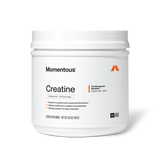
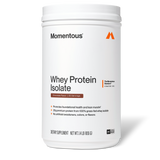
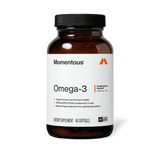
How to know if supplements are third-party tested? When shopping for any supplement, including omega-3, whey protein isolate, or a third-party tested creatine (among many others), you’ll need to do a little work to determine if the supplement is third-party certified. It’s part of learning how to read a supplement label. Remember, these extra steps are worth it for your health, safety — and sport. Here’s exactly what to do:
Find the seal on the label
Confirm the product in their database
NSF Certified for Sport: https://www.nsfsport.com/certified-products/
Informed Sport: https://sport.wetestyoutrust.com/
USP: https://www.quality-supplements.org/usp_verified_products
BSCG Certified Drug Free: https://www.bscg.org/certified-drug-free-database
Match the lot number on your bottle to a tested lot
Ask for or look up the Certificate of Analysis (CoA)
This is important for transparency. The CoA is a document that verifies that a product has gone through quality and safety testing. The supplement brand should have the CoA on their website for public viewing. For example, you can view Momentous Certificates Of Analysis here.
With different supplement certifications, it can be tough to know where to start when you’re wondering if your — for example — creatine is third-party tested. A good place to start is to search for the product in the NSF and Informed Sport databases and check the brand for a public CoA library that includes the specific product you’re looking at. If a brand does not share those results, that is all the information you need. Meaning: You should reconsider a brand that is not upfront and transparent about its ingredients and manufacturing processes.
If you are an athlete, Ehsani recommends looking for a sports-specific seal that analyses for banned substances like NSF Certified for Sport or Informed Sport. “Athletes can feel good about choosing these,” she says.
It’s also unfortunate that you can’t simply look for the seal, says Ehsani. “Sometimes supplements may put a seal on their bottle but the product itself doesn’t appear in the database. Although I don’t know how often this happens, I do know that this is bad for consumers.”
Just because a supplement has been “tested” doesn’t mean it’s third-party tested. Here are the shopping red flags to watch for when you’re assessing a supplement label:
“Tested” with no named program/certifier/lab
No identifiable seal on the product
Vague language like “doctor-formulated”
“Lab tested,” meaning that the brand’s own lab tested their products internally
GMP certified used to prove a product was tested (it does not mean a product was tested)
CoAs that are hard to read and do not contain lot numbers, dates, or methods
Proprietary blends that are not forthcoming about ingredients or dosages
Momentous follows The Momentous Standard when it comes to supplement testing:
Every Momentous product is manufactured in a facility that is certified and audited by the NSF.
Momentous also has committed to NSF Sport and Informed Sport testing where every single batch of products is tested for banned substances. If a batch fails, it’s destroyed — not sold.
You’ll also find Certificates Of Analysis (CoAs) to view testing information tied to the specific product lot. For example, if you want a vegan protein powder tested for heavy metals or an NSF certified protein powder, you can find more information on the manufacturing on the CoA pages.
The FDA does not approve supplements before they go on sale, so independent, third-party certification is the best signal of quality you have. Third-party testing confirms that what’s in the bottle matches the ingredient label. Sports-specific certifications confirm that there are no banned substances within the product. However, this testing does not confirm that the product is effective or right for you. To check your supplement, you can look for the third-party seal on the product, check the certifier’s database, and match your product lot.
Oh, and you’re always free — no, encouraged — to check us at our Certificate Of Analysis. We want everyone to know exactly what they’re taking.
The product should have a third-party certifier label on the product or the product listing on the website. Then, go to the certifier’s database on their website and type in the product. It should pop up so you can confirm it.
Third-party tested supplements may be safer to take compared to untested supplements. Third-party certification shows that the content of the bottle and the label match, there are typically no abnormal levels of contaminants, and the manufacturing facility has been audited. It does not guarantee that the product is effective or specifically safe for you.
Yes. Every Momentous product is manufactured in a facility that is certified and audited by the NSF. In addition, most of the line is NSF Certified for Sport or Informed Sport. Every lot has a published Certificate Of Analysis.
Recommended Products