It's Not the Magnesium. It's What It's Bound To.
|
|
Walk down any supplement aisle, or scroll any wellness feed, and you'll hit the same assumption over and over: more magnesium is better magnesium, and one bottle is basically the same as the next. Neither is true.
Magnesium is magnesium. It's an element on the periodic table, the same charged mineral no matter what label it's sold under. What actually varies — and what should determine which bottle you buy — is the compound magnesium is bound to. That compound, not the magnesium itself, is what decides how well your body absorbs it, how gently it sits with your gut, and which system in your body it ends up supporting: sleep, muscle recovery, or cognitive function.
This isn't a marketing distinction. It's basic chemistry with real clinical consequences, and understanding it is the difference between guessing at a supplement and choosing one on purpose.
Magnesium ions are highly reactive and unstable on their own. In a supplement, magnesium always has to be paired with another molecule — a "chelate" or compound — to be manufactured, swallowed, and absorbed at all. There's no such thing as pure, unbound magnesium in a capsule.
Think of magnesium as cargo that can't move without a vehicle. The vehicle is the compound it's bound to — glycine, L-threonate, citrate, oxide, malic acid, and so on. The cargo never changes. But the vehicle determines the route: how the compound is absorbed in the gut, whether it can cross into brain tissue, how much of it your body actually retains versus flushes out, and even whether it causes GI upset along the way.
This is why two products can list "200mg of magnesium" and behave completely differently. Magnesium oxide, one of the most common and least expensive forms on the market, is absorbed at a fractional rate compared to organic, chelated forms — in one controlled trial, oxide showed roughly 4% fractional absorption versus 28–33% for better-absorbed forms like citrate, chloride, and lactate (Firoz & Graber, 2001). A separate head-to-head trial found citrate and an amino-acid chelate both outperformed oxide in raising plasma and urinary magnesium after both single and repeated dosing (Walker et al., 2003). Same mineral. Wildly different outcomes. The compound did that.
Momentous's magnesium portfolio is built around this exact principle. Instead of one generic "magnesium" SKU, there are three distinct products, each bound to a different compound, each doing a different job in the body.
What that binding enables: Most magnesium compounds are stopped by the blood-brain barrier — they simply can't get from the bloodstream into brain tissue in meaningful amounts. L-threonate is the exception. Threonate is taken up by glucose transporters that carry it across the blood-brain barrier, bringing magnesium along with it. That's a structural property of the compound, not something oxide, citrate, or glycinate can replicate.
Clinical evidence: The foundational research came out of MIT, where Slutsky and colleagues showed that oral magnesium L-threonate raised cerebrospinal fluid magnesium in animal models — something equivalent doses of magnesium gluconate and chloride failed to do — and improved learning and memory performance as a result (Slutsky et al., Neuron, 2010). In humans, a 12-week randomized trial in adults aged 50–70 with self-reported memory complaints found improvements on a composite cognitive score after supplementing with magnesium L-threonate (Liu et al., MMFS-01 trial, 2016). A follow-up study in healthy Chinese adults found similar cognitive benefits from a Magtein-based formula (Zhang et al., 2022). These studies are still early — sample sizes are modest, and more independent replication is warranted — but the mechanism and the direction of the evidence are consistent.
Best use case: Cognitive clarity, memory support, and focus. This is the magnesium to reach for if brain performance is the goal, typically taken earlier in the day.
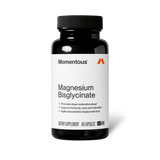
What that binding enables: Bisglycinate is absorbed through the body's dipeptide transport channels in the intestine — a different absorption route than the one minerals typically compete over — which is part of why it's gentler on digestion than harsher forms and doesn't carry the laxative effect associated with something like magnesium oxide or citrate at higher doses (Siebrecht, 2019). Because glycine itself supports GABA activity, the calming signal in the nervous system, this form effectively delivers two calming inputs in one capsule: the magnesium, and the amino acid carrying it.
Clinical evidence: A 2025 randomized, placebo-controlled trial of 155 adults with self-reported poor sleep found that four weeks of magnesium bisglycinate supplementation (250mg elemental magnesium daily) produced a significantly greater reduction in Insomnia Severity Index scores than placebo, with the largest benefit seen in people who started with lower dietary magnesium intake (Nature and Science of Sleep, 2025). The effect size was modest, and this is a newer, single trial — but it's the first study to isolate bisglycinate specifically, rather than magnesium in general, for sleep outcomes.
Best use case: Sleep onset, sleep quality, and general nervous-system calm — including everyday stress. Typically taken in the evening, 30–60 minutes before bed, though it can be used any time calm is the goal.
What that binding enables: Because malic acid is already a working part of your cells' energy-production machinery, pairing it with magnesium theoretically supports the same pathway magnesium is independently involved in: muscle contraction, relaxation, and cellular energy metabolism.
Clinical evidence: This is the newest and least-studied lane of the three, and it's worth being direct about that. The clearest human data on magnesium plus malic acid comes from a placebo-controlled pilot study in fibromyalgia patients, where a magnesium-malic acid combination reduced pain and tenderness scores with dose escalation over an extended trial period (Russell et al., Journal of Rheumatology, 1995) — a finding about muscle pain and tenderness, not sports performance specifically. Separately, a broader meta-analysis of magnesium supplementation (not malate specifically) found it can meaningfully support muscle strength and function in people who are magnesium-deficient, though the evidence is less consistent in athletes who already have adequate magnesium status (Wang et al., Magnesium Research, 2017; Zhang et al., Nutrients, 2017). In short: the mechanism is sound biochemistry, and the muscle-function evidence for magnesium broadly is real, but malate-specific performance research in healthy, active adults is still thin.
Best use case: Muscle recovery, energy metabolism, and daily magnesium support for people who are active and want to cover this specific biochemical base — best understood as a targeted, mechanism-based addition rather than a heavily studied performance-enhancer on its own.
Once you take the compound into account, the choice gets a lot simpler:
If you're trying to fall asleep faster, sleep more deeply, or take the edge off daily stress, Mag Bisglycinate is the one built for that job — it's also the form behind Momentous's reformulated Nightly Sleep Capsule.
If your goal is mental clarity, memory, or cognitive performance, Magtein (Magnesium L-Threonate) is the only one of the three with a plausible route across the blood-brain barrier.
If you're active and want to support muscle recovery and cellular energy production, Mag Malate is the mechanistic fit — with the caveat that it's the least clinically established of the three.
Many people find they need more than one job covered — sleep and cognitive support aren't mutually exclusive goals, and there's nothing wrong with using both a brain-focused and a body-focused magnesium at the same time. The point isn't that one magnesium beats the others. It's that "magnesium" was never really the variable that mattered. The compound was always doing the work.
Firoz, M., & Graber, M. (2001). Bioavailability of US commercial magnesium preparations. Magnesium Research, 14(4), 257–262.
Walker, A.F., et al. (2003). Mg citrate found more bioavailable than other Mg preparations in a randomised, double-blind study. Magnesium Research, 16(3), 183–191.
Siebrecht, S. (2013). Magnesium bisglycinate as a safe form for mineral supplementation in human nutrition. Uehlinger + Cie AG monograph.
Slutsky, I., et al. (2010). Enhancement of learning and memory by elevating brain magnesium. Neuron, 65(2), 165–177.
Liu, G., et al. (2016). Efficacy and safety of MMFS-01, a synapse density enhancer, for treating cognitive impairment in older adults. Journal of Alzheimer's Disease, 49(4), 971–990.
Zhang, C., et al. (2022). A Magtein-based formula improves brain cognitive functions in healthy Chinese adults. Nutrients / PMC9786204.
Author(s) (2025). Magnesium bisglycinate supplementation in healthy adults reporting poor sleep: A randomized, placebo-controlled trial. Nature and Science of Sleep, 17. PMID: 40918053.
Russell, I.J., Michalek, J.E., Flechas, J.D., & Abraham, G.E. (1995). Treatment of fibromyalgia syndrome with Super Malic: a randomized, double blind, placebo controlled, crossover pilot study. Journal of Rheumatology, 22(5), 953–958.
Wang, R., et al. (2017). The effect of magnesium supplementation on muscle fitness: a meta-analysis and systematic review. Magnesium Research, 30(4), 120–132.
Zhang, Y., et al. (2017). Can magnesium enhance exercise performance? Nutrients, 9(9), 946.
Recommended Products