Creatine Ethyl Ester vs Monohydrate: Key Differences to Know
|
|
Updated June 18, 2026
If you've been researching creatine supplements to boost your athletic performance, muscle growth, or cognitive function, you've likely encountered two popular forms: creatine ethyl ester (CEE) and creatine monohydrate.
While both forms promise to deliver creatine to your muscles for enhanced energy production, they differ significantly in their molecular structure and how your body processes them.
Creatine monohydrate is the original, most-researched form, proven in thousands of studies to increase muscle phosphocreatine stores, strength, and power output. It works by replenishing ATP, your muscles’ primary energy source during high-intensity exercise, leading to better performance and recovery.
Creatine ethyl ester (CEE) was developed with claims of superior absorption and reduced water retention by attaching an ester group to the creatine molecule. However, research shows that CEE breaks down more rapidly into creatinine and is less effective at increasing muscle creatine levels or improving performance.
In short, creatine monohydrate is the gold standard backed by decades of research, while CEE is a newer form of creatine that was marketed as an "improved" version promising better absorption but has since been challenged by scientific studies. Note that there are many different types of creatine now on the market, including creatine HCL, micronized creatine, and creatine nitrate.
This article will explore the scientific differences between CEE and monohydrate (particularly their absorption rates, efficacy, and value) to help you choose the supplement that will deliver the best results for you.
Creatine monohydrate is the simplest and most trusted form of creatine. It’s made by binding creatine—a natural compound your body produces from amino acids—to a single water molecule, which makes it about 88% pure creatine by weight. You can find small amounts of creatine in foods like red meat and fish, but supplementing ensures your muscles and brain are fully stocked for peak performance.
Once in your body, creatine is stored in your muscles, brain, liver, and kidneys as phosphocreatine, where it helps quickly regenerate ATP—the energy your muscles use during short, intense bursts of activity. This is why creatine is especially effective for activities like sprinting, heavy resistance training, or HIIT workouts.
Key benefits include:
Increased strength and power: Creatine consistently improves muscle strength and performance in resistance and high-intensity training, making it a hugely popular choice with athletes.
Enhanced muscle growth and muscle recovery: By supporting greater training volume and water retention in muscle cells, creatine promotes muscle growth over time.
Improved high-intensity performance: It boosts your ability to perform repeated bursts of effort, like sprint intervals or heavy lifts.
Cognitive benefits: Creatine may also support brain energy metabolism and mental performance, especially under fatigue or sleep deprivation.
Proven safety: With decades of research and widespread use, creatine monohydrate has a well-established safety record even with long-term use.
Creatine monohydrate is a safe, well-studied, and highly effective supplement for improving both physical and mental performance.
CEE is a modified version of creatine that was developed as an alternative to traditional creatine monohydrate. It’s made by attaching an ester group to the creatine molecule, a chemical tweak that was intended to make creatine more fat soluble and easier for the body to absorb.
Some supplement manufacturers have marketed CEE with several bold claims:
Better absorption than creatine monohydrate
Less water retention or bloating
Smaller doses needed to see results
In theory, these benefits sound appealing, but research hasn’t supported the effectiveness of creatine ethyl ester. Studies have shown that CEE breaks down more quickly into creatinine, a waste product, which actually makes it less effective at raising muscle creatine levels. In one controlled study, participants taking CEE saw no greater improvements in strength, muscle mass, or performance compared to those using regular creatine monohydrate.
While creatine ethyl ester supplementation was designed to be a “next-generation” form of creatine with superior solubility, it hasn’t lived up to the hype. The original creatine monohydrate remains the most effective, reliable, and scientifically supported option for boosting sports performance and cognitive function.
| Creatine Monohydrate | Creatine Ethyl Ester | |
|---|---|---|
| Key Benefit | Proven muscle & strength gains as well as cognitive support | Marketed for better bioavailability |
| Source | Synthesized from sarcosine and cyanamide | Creatine with added ester group |
| Recommended Dosage | 3–5 g daily | 2–3 g daily |
| Onset Time | 1–4 weeks | Similar to monohydrate |
| Loading Phase | Optional (20 g/day for 5–7 days) | Not typically recommended |
| Side Effects | Minimal (possible water retention) | Potential stomach upset, fishy taste |
| Research Support | Extensive (1000+ studies) | Limited research, mixed results |
| Cost | $ (most economical) | $$ (more expensive) |
| Best For | Everyone seeking proven results | Not recommended based on research |
Creatine monohydrate is proven to improve muscle performance, while also supporting high-intensity exercise and cognitive health. CEE is marketed as having better absorption, causing less bloating, and requiring smaller doses, though research has not consistently supported these claims.
Creatine monohydrate is synthesized from sarcosine and cyanamide and can also be found naturally in small amounts in meat and fish. CEE is created by attaching an ester group to the creatine molecule, which was intended to improve fat solubility and absorption.
The typical maintenance dosage for creatine monohydrate is 3 to 5 grams per day. CEE is often marketed at a lower dose of 2 to 3 grams per day, though this is based on claims rather than strong evidence.
Most people notice results from creatine monohydrate within 1 to 4 weeks. CEE has a similar onset time, but studies suggest that its actual uptake in muscle may be lower.
A loading phase for creatine monohydrate is optional; taking around 20 grams per day divided into 4 doses for 5 to 7 days can speed muscle saturation. A loading phase is generally not recommended for CEE.
Creatine monohydrate is well tolerated, with minimal side effects; some users may experience mild water retention. CEE may cause stomach upset or a fishy aftertaste, and its effects are less predictable.
Creatine monohydrate has been extensively studied, with over 1,000 studies confirming its effectiveness and safety. Research on CEE is limited, and the results are mixed; overall, it appears to be less effective than monohydrate.
Creatine monohydrate is the most economical form of creatine, while CEE is generally more expensive.
Creatine monohydrate is suitable for anyone looking for a safe, proven supplement to improve strength, performance, muscle growth, and cognitive function. CEE is not recommended based on current research, as it offers no clear advantage over monohydrate.
Creatine monohydrate and CEE are similar in several ways. Both are designed to increase the amount of creatine stored in your muscles, which helps support the body’s ability to produce energy during high-intensity exercise. They are both derived from the same creatine molecule and are taken as oral supplements. Additionally, both forms are marketed primarily for enhancing athletic performance.
Creatine monohydrate has an extensive safety profile, backed by decades of research and thousands of studies. It is generally very well-tolerated, with minimal side effects, the most common being mild water retention (learn more about this and some of the most prevalent myths surrounding creatine intake). This makes it one of the most thoroughly studied and trusted supplements for athletes and active individuals.
CEE, however, raises a few safety considerations. Research suggests that it may convert more rapidly into creatinine, a waste product, rather than being effectively stored in the muscles. There is also far less research on its long-term safety, and some users report side effects such as stomach discomfort or an unpleasant taste.
Overall, creatine monohydrate remains the gold standard in terms of both effectiveness and safety, while CEE offers no clear safety advantage and is less well-supported by research.
Based on the overwhelming scientific evidence, creatine monohydrate is the clear winner. It's more effective, more economical, and has a proven track record of safety and results for long-term use. Creatine ethyl ester, despite its marketing claims, has actually been shown to be less effective than monohydrate in head-to-head studies.
If you're looking for the highest-quality creatine monohydrate available, check out Momentous.
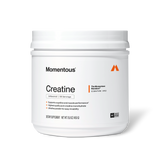
Momentous® Signature Spec Creatine sets a new bar for purity and quality.
Sourced from the highest-quality global creatine production and manufactured in a pharmaceutical facility using reverse-osmosis water purification, it delivers 10x fewer impurities and 2–5x stricter heavy metal limits than standard creatine.
Every batch is verified through a six-stage testing protocol and NSF Certified for Sport®, so you know that what's on the label is exactly what's in the bottle. No additives, no sweeteners, no compromises.
Also available as convenient 15-Travel Packs in unflavored or lemon flavor for on-the-go supplementation.
For a no-mix option, Momentous Creatine Chews deliver the same Momentous Standard® of quality in a portable, chewable format.
Each pressed-powder tablet provides 1g of pure creatine monohydrate, for flexible dosing and consistent potency. They’re also NSF Certified for Sport® and contain no artificial colors or sweeteners.
Available in three flavors—Lemon-Lime, Strawberry, and Mango—in 150-count tubs or 3-flavor variety packs.
Whether you're training, traveling, or at the office, consistency has never been easier.
“This is the first Creatine we have used and we love it! I always love simple packaging, but more importantly it dissolves with no taste. We are in our 60s and are using it for muscle maintenance and cognitive support. We are both very active and still working. We love it!”
-Cathie M.
“For anyone serious about strength, recovery and quality ingredients, this is one of the best-in-class creatine powders I’ve used.”
-Oliver L.
“Improved my recovery and my mental focus.”
-Michail P.
Creatine monohydrate is cheaper than creatine ethyl ester because it is simpler to manufacture, widely available, and has been produced at scale for decades. Ethyl ester requires additional chemical modification, which increases production costs, yet it does not offer proven performance advantages over monohydrate.
You can safely switch from creatine ethyl ester to creatine monohydrate, and doing so is often recommended based on research showing that monohydrate is more effective at increasing muscle creatine levels and improving performance. No special transition or tapering is needed; simply replace your CEE dose with a standard monohydrate dose of 3–5 grams per day.
Creatine monohydrate can cause mild water retention, primarily within the muscles, which is a normal part of its mechanism. Claims that ethyl ester reduces water retention have not been consistently supported by research, so in practice, monohydrate does not cause significantly more bloating than CEE for most users.
Research comparing creatine ethyl ester to monohydrate shows that monohydrate is more effective at increasing muscle creatine levels, enhancing strength, and supporting high-intensity performance. Studies indicate that CEE breaks down more quickly into creatinine, reducing its effectiveness, and long-term research on CEE is limited compared with the extensive, decades-long data supporting monohydrate.
Emma-Kate Lidbury
Emma-Kate Lidbury is a freelance writer and editor with 20 years of experience working in the health and fitness world.
Recommended Products