Can Creatine Actually Improve Brain Fog?
|
|
Updated June 18, 2026
Did you know that creatine's potential benefits extend beyond the gym?
While creatine is best known for improving physical performance and muscle growth, its cognitive benefits are gaining scientific traction.
In this article, we’ll explore emerging research that suggests that creatine could be a vital tool for boosting cognitive health, particularly in combating conditions like brain fog.
Improves Mental Clarity: Creatine can help maintain brain function and performance, especially during stress and lack of sleep, which often cause brain fog.
Boosts Memory and Reasoning: Studies show that taking creatine can significantly improve short-term memory and reasoning skills, though its impact on other brain functions like attention varies, benefiting mostly older adults and those under stress.
Helps Post-COVID Recovery: Creatine has shown promise in reducing fatigue and cognitive issues in people recovering from COVID-19, suggesting it could help improve energy use in body tissues. But more research is needed.
Brain fog is not a medical condition but rather a symptom affecting mental processes. Brain fog is often characterized by confusion, forgetfulness, lack of focus, and mental clarity.
People experiencing brain fog describe feeling "cloudy" and unable to think clearly. It can be particularly frustrating as it affects your ability to process information and hampers cognitive performance.
Recent studies have begun to shed light on how creatine supplementation could play a role in alleviating brain fog.
Research suggests that creatine helps maintain cognitive function under stress and sleep deprivation, which are common triggers for brain fog. The study indicates that individuals taking creatine showed improved cognitive performance, suggesting a potential protective effect against mental fatigue.
Looking further, a systematic review published by a team of researchers in Greece delves into the cognitive benefits of creatine supplementation among healthy individuals. This review examined multiple randomized controlled trials to assess how oral creatine administration influences various cognitive functions. The findings highlighted a notable improvement in short-term memory and intelligence/reasoning abilities following creatine supplementation.
However, the effects on other cognitive domains, such as long-term memory, attention, and executive function, showed mixed results - performance enhancements were primarily observed in aging individuals and those under stress. These results suggest that while creatine has potential as a cognitive enhancer, its benefits might be more pronounced in specific populations and mental tasks.
Finally, a study published in Food Science & Nutrition explored the efficacy and safety of creatine supplementation as a treatment for post-COVID-19 fatigue syndrome, including body aches, issues with lungs, loss of taste, headaches, and problems concentrating. In a double-blind, placebo-controlled trial, 12 patients were given 4 grams of creatine monohydrate daily for six months.
The results indicated significant improvements in tissue creatine levels and a reduction in symptoms such as general fatigue, ageusia, breathing difficulties, and cognitive issues like difficulty concentrating. These findings suggest that creatine supplementation could enhance tissue bioenergetics and alleviate symptoms associated with post-COVID-19 fatigue syndrome, warranting further research in larger cohorts.
Studies have shown that creatine can enhance cognitive processing, particularly under conditions that typically impair cognitive performance, such as sleep deprivation, hypoxia, or stress.
Creatine supplementation has also been shown to enhance cognitive processing in older people, particularly where natural or experimental impairments exist, with evidence also supporting its benefits for improving cognitive function in both young and old adults.
A systematic review of randomized clinical trials highlighted the cognitive benefits of creatine supplementation in healthy individuals, finding that creatine notably improves short-term memory, intelligence, and reasoning.
While the impact on other cognitive domains like attention and executive function showed mixed results, the enhancement in core cognitive abilities suggests that creatine could be particularly beneficial for aging individuals and those experiencing cognitive stress.
These findings underscore creatine’s potential as a safe supplement to improve cognitive performance, with further research needed to explore the effects of creatine supplementation across a broader range of cognitive functions.
Beyond improving memory and reasoning, creatine has been associated with other cognitive advantages.
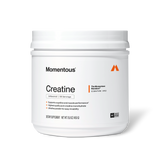
Momentous® Signature Spec Creatine sets a new bar for purity and quality.
Sourced from the highest-quality global creatine production and manufactured in a pharmaceutical facility using reverse-osmosis water purification, it delivers 10x fewer impurities and 2–5x stricter heavy metal limits than standard creatine.
Every batch is verified through a six-stage testing protocol and NSF Certified for Sport®, so you know that what's on the label is exactly what's in the bottle. No additives, no sweeteners, no compromises.
Also available as convenient 15-Travel Packs in unflavored or lemon flavor for on-the-go supplementation.
For a no-mix option, Momentous Creatine Chews deliver the same Momentous Standard® of quality in a portable, chewable format.
Each pressed-powder tablet provides 1g of pure creatine monohydrate, for flexible dosing and consistent potency. They’re also NSF Certified for Sport® and contain no artificial colors or sweeteners. Available in three flavors—Lemon-Lime, Strawberry, and Mango—in 150-count tubs or 3-flavor variety packs.
Whether you're training, traveling, or at the office, consistency has never been easier.
Rachel Levin
Rachel Levin is a writer and editor with over 10 years of experience writing in health, wellness, and travel. She is also an avid outdoor athlete—she's hiked and trekked in almost every continent.
Recommended Products