Creatine HCL vs Monohydrate: Which Form Is Right For You?
|
|
Updated on June 16, 2026
Creatine monohydrate and creatine hydrochloride (HCL) are two popular forms of creatine, a naturally occurring compound that helps your muscles produce energy during high-intensity exercise. Both can help improve muscular endurance and recovery, increase strength and power, and support cognitive function.
Creatine monohydrate has decades of research supporting its effectiveness and value, known to improve strength, power, and muscle mass. Creatine HCL is a newer form that’s more water-soluble, which may improve absorption and reduce bloating or stomach discomfort for some people.
In this article we’ll explore the nuances between these different types of creatine—particularly their absorption, effectiveness, and side effects—to help you choose the supplement that’s best suited for your preferences.
Creatine monohydrate is a naturally occurring compound made from three amino acids: arginine, glycine, and methionine. It's one of the most studied and effective supplements for improving strength, power, and high-intensity performance, making it a popular choice with athletes.
How it works: Creatine is stored in your muscles as phosphocreatine, which helps rapidly regenerate adenosine triphosphate (ATP)—the primary energy source for muscle contractions. This means more energy for short bursts of intense activity, like lifting or sprinting.
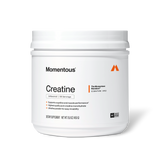
How it’s sourced: While most creatine monohydrate is synthesized in labs, Momentous® Signature Spec Creatine takes this to the next level. It is manufactured in a pharmaceutical facility using reverse-osmosis water purification, resulting in a creatine that's vegan-friendly, exceptionally pure, and built to a specification beyond anything else on the market.
Key benefits:
It can help improve muscular endurance and recovery, as this 2021 review showed
It provides nutrients your body needs to support optimal muscle function
It can help increase strength and power
It can boost energy levels and help decrease recovery time
It can support cognitive function, as evident in this 2019 review of the effects of creatine on cognitive processing
Creatine HCL is a form of creatine bound with hydrochloric acid to increase its solubility in water. This makes it easier to mix and may enhance absorption for some people.
How it works: Like creatine monohydrate, it increases phosphocreatine stores in the muscle cells, helping regenerate ATP—the energy your muscles use for short, intense efforts. The result: better strength, power, and recovery.
How it’s sourced: Creatine HCL is lab-synthesized by combining creatine with hydrochloric acid, resulting in a highly soluble, stable compound.
Key benefits:
It may be better absorbed than other forms of creatine due to its improved solubility
It may reduce bloating and water retention
It can help increase strength and power
| Creatine HCL | Creatine Monohydrate | |
|---|---|---|
| Effectiveness | Effective for strength, performance, and cognitive function, though supported by less research than monohydrate. | Most researched and clinically proven form of creatine for enhancing strength, power, muscle mass, and cognitive function. |
| Mixability | Highly soluble and mixes easily with water. | Momentous® Signature Spec Creatine is micronized into an ultrafine powder that dissolves completely with no clumping, grit, or residue. |
| Absorption | More water-soluble, which may help reduce digestive discomfort in some individuals. | Effectively absorbed and extensively studied for long-term use. |
| Dosage | Typically taken in smaller daily doses of 1–2 grams. | Standard daily dosage is 3–5 grams. |
| Form Factor | Commonly available in powder and capsule forms. | Primarily available as a powder, though capsules are also offered. |
| Side Effects | May cause fewer digestive issues and less bloating for sensitive individuals. | Possible water retention or mild bloating, particularly with high doses. Generally not an issue at recommended 3–5g daily servings. |
| Price | Generally more expensive due to higher solubility and specialized processing. | More affordable and widely available. |
| Best For | Individuals who are sensitive to bloating or prefer a highly soluble, easily digestible option. | Those seeking the most researched, proven, and cost-effective creatine option for long-term performance and health benefits. |
Effectiveness: Creatine monohydrate has an extensive amount of research detailing its efficacy. While early findings on creatine HCL point to efficacy, research is not as robust.
Mixability: Creatine HCL is highly soluble and mixes easily with water. Momentous® Signature Spec Creatine monohydrate matches this with a superior micronization process, an ultrafine powder that dissolves completely with no clumping or grit.
Absorption: Creatine HCL is more water-soluble, which some believe can make it more absorbable. Creatine monohydrate is also easily absorbed.
Dosage: The recommended daily dosage of creatine monohydrate is 3 to 5 grams. Creatine HCL is typically taken in smaller amounts, 1 to 2 grams per day.
Form Factor: Creatine monohydrate is primarily available as a powder, but is growing in popularity in chewable form.
Side Effects: Creatine monohydrate may lead to mild bloating and/or water retention in some people, especially with higher doses, whereas creatine HCL typically leads to fewer digestive issues. The reverse-osmosis water purification process involved in the manufacturing of Momentous® Signature Spec Creatine, makes this far less likely.
Price: Creatine monohydrate is more affordable and widely available, while creatine HCL is typically more expensive.
Best For: Creatine monohydrate is widely considered the gold standard of creatine; it is well researched, cost effective, and safe for long-term use. Creatine HCL may be more suitable for those who encounter digestive issues with monohydrate.
Creatine HCL and monohydrate are similar in that they both deliver the same active ingredient—creatine—which helps increase phosphocreatine stores in your muscles. This boosts ATP production, enhancing strength, power, and performance during high-intensity exercise.
Both forms also support improved recovery, lean muscle growth, and overall training output. Ultimately, they work through the same biological mechanism—the main difference lies in how they’re absorbed and how your body tolerates them.
Both creatine monohydrate and creatine HCL have strong safety profiles when used as directed, especially in healthy individuals. Creatine monohydrate is the most researched supplement in sports nutrition and has been shown to be safe for long-term use in numerous studies.
Designed to be more water-soluble, which may reduce stomach issues and bloating.
Typically taken in smaller doses, which may lessen the risk of GI discomfort.
Individuals with kidney issues should consult a healthcare provider before using any form of creatine, as it is processed through the kidneys.
Pregnant or breastfeeding women should avoid creatine unless advised otherwise by a physician due to limited research.
Teens and younger athletes should use creatine only under the guidance of a qualified healthcare or sports nutrition professional.
For most healthy adults, both forms are safe and effective with proper use.
If you're looking for a high-quality creatine monohydrate, Momentous® Signature Spec Creatine sets a new bar.
Sourced from the highest quality global production and manufactured in a pharmaceutical facility using reverse-osmosis water purification, it delivers 10x fewer impurities and 2-5x tighter heavy metal limits than other premium creatines. Its superior micronization process yields an ultrafine powder (closer to powdered sugar than the granulated texture of standard creatine) that dissolves completely with no clumping, grit, or residue.
Quality claims are easy to make. Momentous verifies them through a six-stage testing protocol involving four independent agencies, with expanded screening for PFAS and microplastics that goes well beyond what most of the industry tests for at all. NSF Certified for Sport® is the starting line here, not the finish.
“My workouts and recovery have never been better. I have exercised my entire life, and was feeling a bit sluggish until I started using creatine. I cannot tell you how much I am enjoying using it and feeling amazing.”
-Dawn S.
“Best creatine I've tried hands down, I tolerate it much better digestive wise, so I can take more doses per day.”
-Benji R.
“I love that it dissolves in my coffee completely and has no taste. I've also noticed a difference in my muscle tone.”
-Heidi W.
You don’t need to cycle creatine monohydrate or creatine HCL. Both can be taken continuously and safely over the long term. Cycling—periodically stopping and restarting—was once thought necessary, but research shows no clear benefit to doing so. With monohydrate, some people choose to do a loading phase (20g/day for 5–7 days), but it’s not required.
Creatine HCL typically doesn’t need loading due to its higher solubility and smaller effective dose. The key is consistency: daily use helps maintain muscle creatine levels for optimal strength, performance, and recovery benefits over time.
Creatine monohydrate is generally considered the best form for building muscle, thanks to decades of research proving its effectiveness. It has been shown to consistently boost strength, power, and lean muscle mass when paired with resistance training. While creatine HCL may be easier to digest for some, there’s less scientific evidence supporting its muscle-building benefits.
A loading phase is not necessary with either creatine monohydrate or creatine HCL. While loading can accelerate effects, consistent daily use is what really matters for both forms.
Yes, women can absolutely take creatine monohydrate or creatine HCL—both are safe, effective, and beneficial for women just as they are for men. It does not cause bulky weight gain—that’s largely a creatine myth—though some initial water retention may occur with monohydrate.
Emma-Kate Lidbury
Emma-Kate Lidbury is a freelance writer and editor with 20 years of experience working in the health and fitness world.
Recommended Products