Creatine for Climbers: A Performance and Recovery Booster?
|
|
Updated June 18, 2026
Athletes have long supplemented with creatine, particularly in sports that require explosive speed, power, and strength. It can also help improve muscular endurance, recovery time, and cognitive function. But can the benefits of creatine also help climbers perform better?
In this article, we’ll explore the physical and cognitive benefits of creatine on climbing performance, how climbers can take creatine for optimal results, and examine the potential side effects of creatine supplementation.
Creatine is a compound made from three amino acids that plays a vital role in the energy production process. It is used in the muscles to help create ATP (adenosine triphosphate), the primary source of energy.
Although it is naturally produced by the body, we only create a small amount of it (1-2 grams per day). The amount consumed in our daily diet (through foods such as red meat, poultry, seafood, and animal milk) is typically quite low (especially if you’re vegan), so creatine supplementation can prove highly beneficial.
In fact, this study showed that creatine supplementation, even in omnivores, elevates resting total creatine levels by ~20%. This can be particularly beneficial for those looking to maintain optimal energy levels during high intensity exercise and activities such as climbing.
Increased levels of creatine through supplementation has a strong link with improved levels of power and strength, as well as an improved response to strength training. This study, a recent review of 16 randomized controlled trials, found that creatine is an efficient form of supplementation for muscle growth with adequate training in a variety of athletic activities.
This research, which looked at physical working capacity when fatigued and maximal isometric grip strength, showed significant improvements in the group who supplemented with creatine versus the placebo group.
Although creatine use has long been associated with shorter, high intensity sports, it can be beneficial for those athletes exercising for longer too. This study, published in the Journal of International Society of Sports Nutrition, looked at how creatine can improve muscular endurance and found it can increase time to exhaustion during high-intensity endurance activities, likely due to increased anaerobic work capacity.
Creatine supplementation can also help expedite recovery post-workout by reducing inflammation, increasing glycogen storage, and activating satellite cells in muscles to help heal micro-tears. The results from this study showed how creatine supplementation enhanced muscle recovery after muscle damage.
Creatine’s benefits are not just physical, it is increasingly being recognized as a supplement that can help enhance cognitive function and performance.
This study concluded that creatine supplementation can improve cognitive processing, especially after experiencing acute stress, e.g., sleep deprivation or post-exercise. It also found it can help with chronic, pathologic conditions, such as TBI (traumatic brain injury), aging, Alzheimer’s disease, and depression.
Creatine supplementation can also help reverse or slow the decreases in muscle mass, bone density, and strength that are associated with aging, as evident in this research.
There are typically few side effects to supplementing with creatine, although in some rare cases people can experience weight gain or digestive issues like stomach cramps, nausea, and diarrhea. This is more commonly associated with taking high doses of creatine, such as during a loading phase (taking 20 grams of creatine per day).
Some people are wary of taking creatine because of the notion that it causes you to retain extra water. As it’s transported by sodium, creatine increases cell volume but this leads to hydration and performance benefits, not noticeable weight gain according to this study on creatine myths. This cited research that showed “it does not alter total body water (intra or extracellular) relative to muscle mass over longer periods of time.”
Instead, taking creatine during consistent resistance training can help increase strength and power, leading to hypertrophy (muscle growth). This can contribute to greater lean body mass and so you might gain a little total body weight. But the notion that this is just water weight is false.
Of course, in sports like rock climbing and bouldering, where an excellent strength-to-weight ratio is an advantage, climbers understandably want to see an improvement in performance in return for an increase in muscle mass.
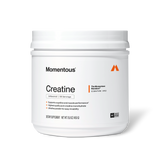
Momentous® Signature Spec Creatine sets a new bar for purity and quality.
Sourced from the highest-quality global creatine production and manufactured in a pharmaceutical facility using reverse-osmosis water purification, it delivers 10x fewer impurities and 2–5x stricter heavy metal limits than standard creatine.
Every batch is verified through a six-stage testing protocol and NSF Certified for Sport®, so you know that what's on the label is exactly what's in the bottle. No additives, no sweeteners, no compromises.
Also available as convenient 15-Travel Packs in unflavored or lemon flavor for on-the-go supplementation.
For a no-mix option, Momentous Creatine Chews deliver the same Momentous Standard® of quality in a portable, chewable format.
Each pressed-powder tablet provides 1g of pure creatine monohydrate, for flexible dosing and consistent potency. They’re also NSF Certified for Sport® and contain no artificial colors or sweeteners.
Available in three flavors—Lemon-Lime, Strawberry, and Mango—in 150-count tubs or 3-flavor variety packs.
Whether you're training, traveling, or at the office, consistency has never been easier.
Emma-Kate Lidbury
Emma-Kate Lidbury is a freelance writer and editor with 20 years of experience working in the health and fitness world.
Recommended Products